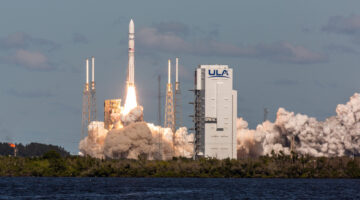
Vulcan failure deepens concerns over US military launch capacity
The failed launch could further delay the rocket's return to national security missions as the Space Force works to expand its launch options.
The failed launch could further delay the rocket's return to national security missions as the Space Force works to expand its launch options.

NSSL will be okay because it can still rely on the Falcon 9 workhorse," said Todd Harrison, senior fellow at the American Enterprise Institute.
There is no single answer to the drone threat, pushing the Pentagon toward a broader mix of defenses.

As space threats continue to evolve, existing satellites need new capabilities to defend and protect, even after launch.
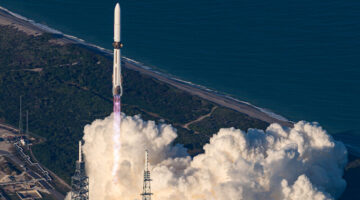
Blue Origin also stuck the landing of New Glenn's reusable first stage, becoming only the second company after SpaceX to do so.
Service leaders see the launch vehicle as a future competitor to SpaceX's Falcon series rockets that currently have a lock on the most critical launches under the Defense Department's National Security Space Launch program.

Lt. Gen. Philip Garrant, chief of the Space Force’s Space Systems Command, stated that the service will not move forward with awards for the newest round of the National Security Space Launch program until Congress approves the fiscal 2025 budget.

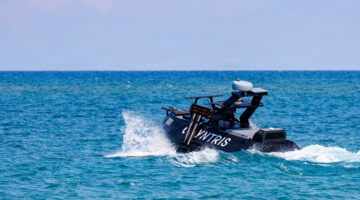
Think of sensing and detection as a network as opposed to individual unmanned surface vessels.

Meanwhile, the report says, the Space Force should be in charge of pursuing large networks of small satellites under the Space Development Agency's Proliferated Warfighter Space Architecture (PWSA) — differentiating its "tactical ISR" job from the "strategic" mission of NRO.

While Space Systems Command hasn't publicly expressed concerns, outside observers point out that there is a real possibility that only Elon Musk's SpaceX will be able to undertake National Security Space Launches in the next few years.